

HoldingBook IChapter 3
Received
At the broken freighter where everyone meets, in the Cementerio de Aura, a crate was about to be swapped for a credit chip. Vedma Oleiro had the chip. El Notario had the crate. And in the crate was the last thing Ada Lys had left of the world she had fallen asleep in.
“You stay in the ship,” Vedma told her as she put her helmet on.
“Fine.”
“I mean it, Nueve.”
“And I said fine.”
Vedma looked at her through the visor the way you look at someone who has just lied without trying. Then she went down the ramp with Chemo behind her. Tais stayed lying on the Tozuda’s spine with her rifle and a ration bar in her mouth. Ada stayed in the cockpit counting to a hundred.
She got to forty.
The meeting freighter had one room with air in it: an officers’ cabin that someone had sealed with foam years ago so business could be done without helmets. There was a table bolted to the floor, four chairs that didn’t match and a hand-written sign: NO WEAPONS IN HAND WHILE TALKING. Underneath, in another hand: HOLSTERED IS FINE.
El Notario was waiting, seated, helmet on the table and the black-covered notebook open in front of him. He was a short man of about fifty, with fine-rimmed glasses and clean hands. Behind him, standing, were two of his lads, three red stripes painted on their helmets.
“Foreman Oleiro,” he said, without getting up. “And, if I’m not mistaken, Chemo Ardal.”
Chemo took off his helmet.
“You’re never mistaken. That’s what’s wrong with you.”
“I owe you a receipt.”
“You owe me three.”
“Two and a half. You took the third in kind.” El Notario turned a page of the notebook without looking at it. “So noted.”
Vedma didn’t sit. She put the credit chip on the table in front of El Notario and stayed standing.
“The Tejedora’s paid. Give us the crate.”
“The Tejedora has paid what the crate was worth yesterday.” El Notario adjusted his glasses. “Today it’s worth more. Since this morning I’ve had messages from El Pináculo. A Commander of the Guardia Vertical, no less. She’s offering triple, and she doesn’t ask what’s inside. That, Foreman, is a buyer.”
“That’s a problem.”
“For you. For me it’s the law of supply. The only law I respect, because it’s the only one neither the Zenith nor the Nadir wrote.”
“We had a deal.”
“We had a deal at a price. The price has changed. The deal still stands.” He spread his hands. “Pay me the difference and the crate’s yours. With a receipt.”
Chemo sat down on one of the odd chairs and put his elbows on the table.
“Know what’s good about receipts, Vedma?” he said. “The bloke who signs them thinks he’s honest.”
“A receipt is the only promise that outlives the person who makes it,” said El Notario, very serious. “That’s why I sign them. You people from La Cicatriz shake hands and trust each other. Then you die and nobody knows what you promised. I write things down. When I’m dead, my debtors will still owe.”
“What good’s that to you dead?”
“It comforts me alive.”
Ada knew nothing about El Notario, or his receipts, or the law of supply. She knew about Revenants.
The Flota had used them for security on the arks: big landing ships with double-height holds that took guard teams down whenever there was trouble at a dock. She had flown co-pilot in one twice, in training. Revenants had a fault that every Flota pilot knew and no manual admitted: the service latch on the hold, under the port nacelle, opened from outside by hand if somebody had forgotten to lock it. And somebody always forgot.
She went out of the Tozuda’s tail hatch, pushed off with her suit thruster and crossed forty metres of vacuum to the Revenant with her lights off. She found the latch by feel. It was unlocked. Forty-seven years, she thought, and people are just as stupid.
The hold smelt of grease and old metal. There were drums lashed down, unlabelled crates, a cargo bike with no wheels and, at the back, against the wall, a padded transport crate with a broken Vanguard seal.
Ada opened it.
He was exactly as she remembered and completely different. The same thirty-five-centimetre sphere, the same plated armour, the same big round lens like a small lighthouse. But the plates had marks they hadn’t had before, and a crust of old frost in the joints, and the lens was dark and dull, like a closed eye.
“Mamparo,” she said.
Nothing.
“Mamparo, it’s me. It’s the one from nine.”
Nothing.
Ada took off her right glove, flexed her fingers and rapped twice with her knuckles on the sphere’s casing, the way you rap the panel before take-off.
For three seconds nothing happened. Then, deep in the lens, very far away, an amber light came on. First a dot. Then a ring. Then the whole eye, faint, trembling, like a lamp struggling to remember what it was for.
“Are you shooting?” said the sphere.
The voice was flat and short, toneless, the voice Ada had heard every six hours for four years announcing section seven’s pressure.
“No,” said Ada.
The lens stayed still, looking at her.
“Nueve.”
“Yes.”
“Lys. Tanda pilot.”
“Yes.”
“Awake.”
“Awake.”
“Time.”
Ada laughed. It was a strange laugh, and it broke in the middle.
“I haven’t got a clue what time it is, Mamparo. A day ago I was twenty-four.”
“You still are.”
“Yeah.”
“Has anyone come?”
“I have.”
“You don’t count. You were inside.”
Ada ran a hand over her face. Her eyes were wet and she couldn’t wipe them from inside the visor.
“And the other eight?”
“Logged.”
“When?”
“One every few years. The last, eleven years ago.”
“Did you see?”
“Yes. Couldn’t do anything. Kept the pressure.”
“Forty-six years.”
“Sixteen thousand seven hundred and seventy-six days. Holding.”
Ada swallowed.
“Mamparo, what happened on day 236? Why did the seven come loose?”
The light in the lens dropped half a tone.
“I don’t open the seven.”
“What?”
“Order. It doesn’t open until someone comes who doesn’t shoot.”
“What order? Whose?”
“I don’t open the seven,” Mamparo repeated, the way a closed door repeats that it is closed.
In the meeting room, El Notario was explaining the difference between the price of a thing and its value when every radio went off at once.
“This is Commander Ysolde Kray of the Guardia Vertical. The cargo aboard the Revenant Conforme is requisitioned by the Cátedra de Ascensión. Nobody move.”
El Notario closed his notebook.
“Madam,” he said on the open channel, very politely, “in the Cementerio the Cátedra has no requisition. It has a tariff.”
The answer was a shot.
It hit nothing: it passed across the Conforme’s nose, red and silent, two metres from the paintwork, and vanished into the scrap. It was a warning. El Notario’s lads were not in the mood for warnings. The Revenant’s two turrets swung towards the ship that had just come out from behind a hull: a white XASTER with gold piping, big, two-seater, with its own turret on its back.
“Oh, bollocks,” said Chemo over the radio.
“To the ship,” said Vedma. “Now.”
The Revenant’s turrets opened fire. The XASTER slid aside like a fish and answered. And in the scrap all around, as if someone had clapped their hands, eyes lit up.
Six. Ten. Twenty. The sentinels of the Cementerio don’t tell sides apart, only shots. They have spent forty-six years on a salvage order someone gave them before the Armisticio, and the order says anything firing near a wreck is an intruder.
Ada shut the crate with Mamparo inside, slung it on her back like a bag of tools, eleven and a half kilos that weighed nothing in vacuum and weighed everything, and went out through the service latch.
Outside there was light everywhere. Red beams from the XASTER, bursts from the Conforme, the sentinels’ cutters glowing before they fired. A drone passed so close she saw its eye. Ada opened her suit thruster all the way and flew in a straight line for the Tozuda’s open ramp, which was exactly what you weren’t supposed to do and the only thing she could think of.
“Left,” said Mamparo, from the crate, over the suit radio. “Now.”
Ada went left. Six beams cut the space where she would have been.
She landed on the Tozuda’s ramp on her knees. Vedma and Chemo were coming in behind her, on their own desperate flight from the freighter. Tais was still on the ship’s spine, shooting out drones’ eyes with the calm of someone skimming stones across a lake.
Vedma saw the crate.
“Is that what I think it is?”
“Take off.”
“We haven’t paid for it.”
“Take off or I will.”
Vedma looked at her for a whole second, which in the middle of a firefight is a long time. Then she ran for the cockpit.
The Tozuda left the meeting freighter with its ramp still rising, Tais clinging to the dorsal hatch and Chemo shouting things that weren’t words. Vedma flew her out well. Threaded her between two hulls, turned, dropped, climbed again. But the Commander’s XASTER was behind them, and a XASTER is a fighter and a Tortuga is a hauler, and Vedma knew it as well as Ada did.
“She’s not shooting at us,” said Chemo, watching the rear screen. “Why isn’t she shooting at us?”
“Because she wants the crate in one piece,” said Ada.
A drone came out of a container right in front of the nose. Vedma hauled back on the stick and the Tozuda reared, scraped her belly along a wreck and shed a shower of sparks.
“Can you do better?” Vedma shouted, without turning round.
“Yes.”
Vedma let go of the stick.
Ada sat in the pilot’s seat. She adjusted the harness, which was set for someone taller. She rapped twice on the panel with her knuckles. Then she took hold of the Tozuda’s stick the way you take the hand of someone you know.
“Come on, old girl,” she said to the ship. “Let’s go home.”
And she headed straight for the big fragment, the one with three letters.
“What are you doing?” said Vedma.
“There was a hangar in there.”
“In there there’s a salvage station on top and forty-six years of scrap.”
“The scrap’s on the outside. The hangar’s on the inside.”
The XASTER settled in behind them. Over the radio, the Commander spoke in a calm voice, someone in no hurry because she had already won.
“Tortuga, this is Kray. Stop your ship. I have no interest in you. Only the cargo.”
“How thoughtful,” said Chemo.
The fragment’s flank grew in the canopy until it filled it. The three letters passed over the cockpit, enormous, three storeys high each. Ada dropped towards the belly of the hull, where there was a black patch that wasn’t a shadow.
“That wall won’t hold,” said Mamparo.
“I know.”
“Right.”
The black patch was a torn-off hangar door. Ada put the Tozuda through it with half a metre to spare on each side.
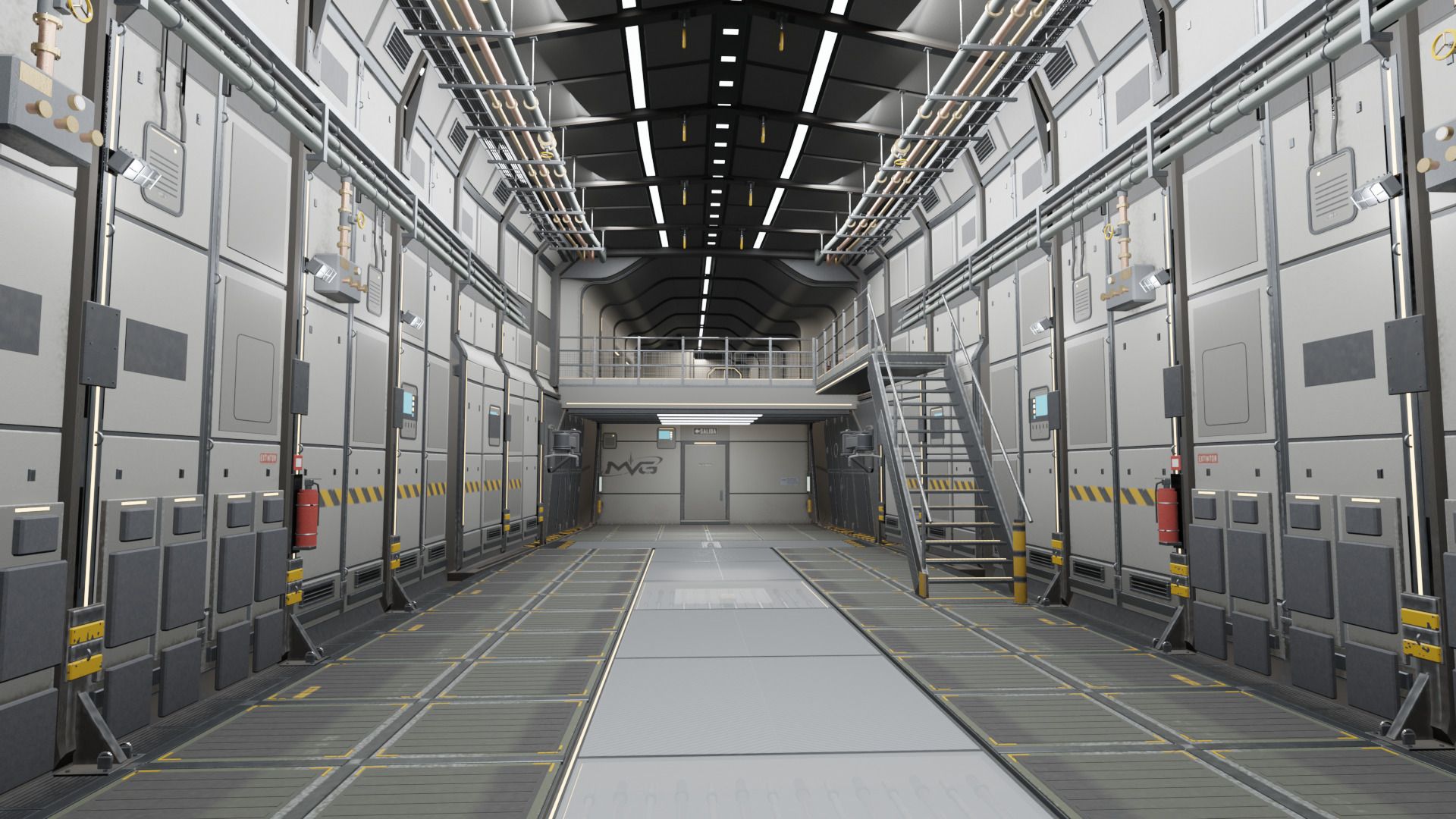
Inside it was dark and full of floating things. Ada switched on the nose light. They passed twisted cargo frames, a scaffold, a broken crane. And on the far wall, in a row, six empty docking cradles, each with its number stencilled large in the square letters of the Matriz.
AU-T1. AU-T2. AU-T3. AU-T4. AU-T5. AU-T6.
“The Aurora’s Tortugas,” said Ada. “This is where I learnt to fly.”
Vedma didn’t answer. She was looking at cradle AU-T4. Ada didn’t notice, because she was looking at the gap at the far end, a crack in the hull through which the starlight came in. It was narrow. It was very narrow.
“We won’t fit,” said Chemo.
“We’ll fit.”
“How do you know?”
“Because I used to get out that way when I didn’t want the hangar chief to see me.”
“Forty-seven years ago.”
“Cracks don’t shrink.”
Ada rolled the Tozuda onto one side, folded the legs, cut the port engine for a second and a half and slid her through the crack edgeways, like a letter under a door. Something scraped along the spine with a long screech. Tais, inside by now, said a word her mother hadn’t taught her. And they came out the other side of the fragment, into the light, with three hundred metres of hull between them and the Commander’s XASTER and no way for it to follow.
Ada cut the engines and let the Tozuda drift among the scrap with her lights off, one more wreck among wrecks.
Nobody spoke for a minute. Over the radio, Commander Kray’s voice faded, filling with static, searching on the wrong side of the fragment. Then it stopped.
On the open channel came another voice, polite and tired.
“Crew. Let it be noted. You owe me a crate.”
Vedma switched the radio off. Then she turned in the co-pilot’s seat, slowly, and looked Ada up and down as if seeing her for the first time.
“Who the hell are you?”
“Nueve.”
“Lys,” said Mamparo from the crate, which Chemo had strapped to the cockpit floor. “Ada. Tanda pilot. Arca Aurora.”
Vedma looked at the crate. Then at Ada.
“The Aurora came down forty-six years ago.”
“Yeah,” said Ada. “I didn’t.”
Book contents
- PrologueHolding
- Chapter 1No Prior Record
- Chapter 2We're Not Your Friends
- Chapter 3Received
- Chapter 4Unnumbered Axiom
- Chapter 5One Alive
- Chapter 6The Wall
- Chapter 7What Nobody Wanted
- Chapter 8Measured, Not Derived
- Chapter 9Red Ribbon
- Chapter 10Lelo
- Chapter 11Dock Seven
- Chapter 12Twelve Minutes
- Chapter 13The Names
- EpilogueChoose Your House
Reading settings
Your settings and your place are kept in this browser only.
