

HoldingTome IChapitre 7
What Nobody Wanted
Ce contenu n’est pas encore traduit. Affichage de la version English.
At El Fondeadero, the Nadir station, everything has a price and almost nothing pays tax. The Tejedora Sable Vunn knew both numbers for every item. That morning they were going to bring her a crate worth more than the whole station, if it was sold well. And Vunn always sold well.
SABLE VUNN. The Tejedora, the Weaver. Runs El Fondeadero’s Tablón de Trueque, the barter board. Fifty-eight. She knows what anything is worth without looking at a screen, and nearly always knows what the seller is worth too. What you need to know: she charges a very small commission, because what she really charges for is finding everything out.
Vunn started her days on foot, because on foot you find out more than sitting down.
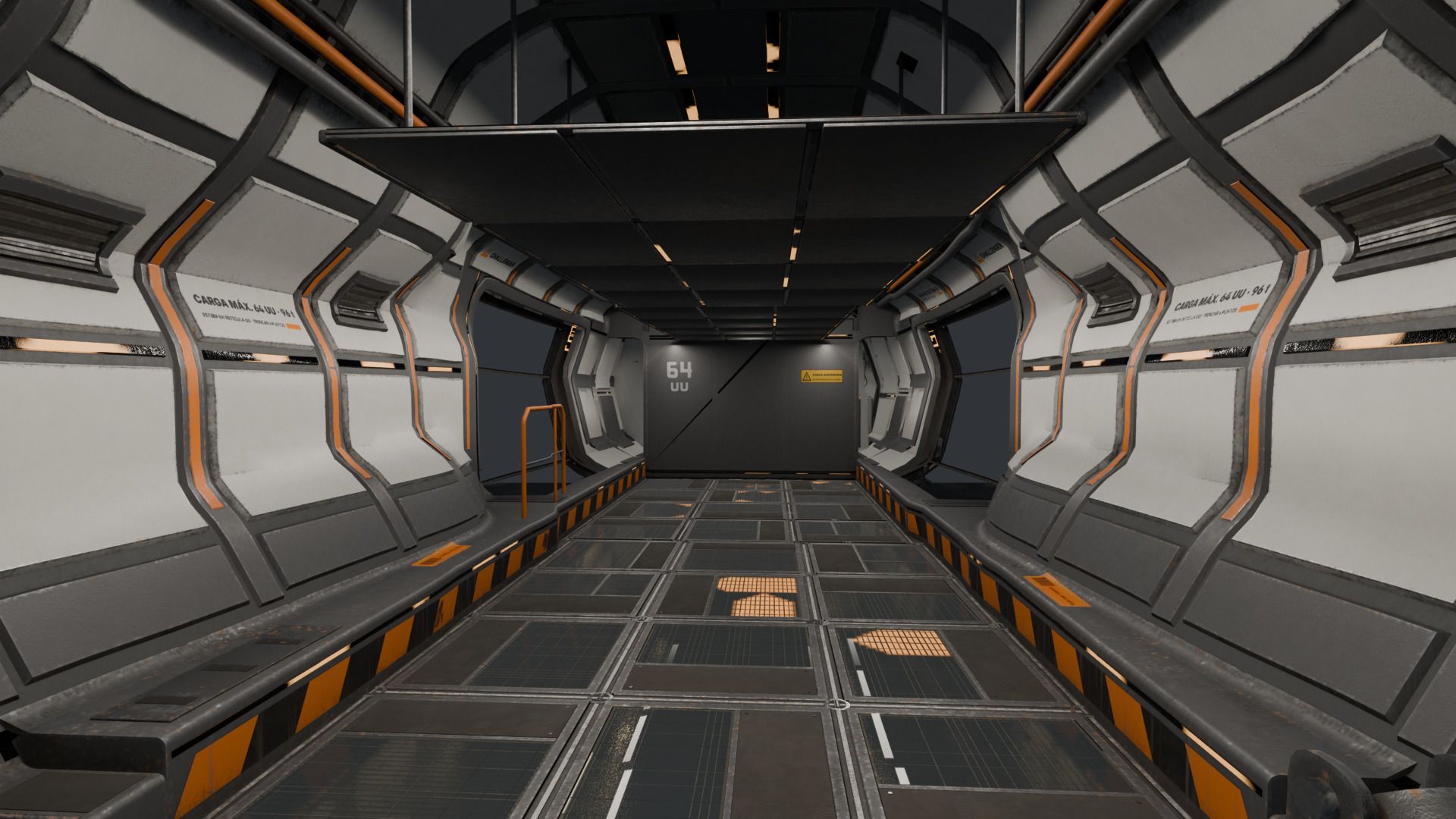
She left her cabin in El Casco Viejo, the oldest part of the station, which had been the keel of the first Nadir salvage arks and now held the most sought-after homes, because at El Fondeadero “old” means “proven”. She walked past the hall of the Círculo, where the assembly had spent two days voting on whether to vote on something. She went down a corridor that turned at a different speed from the one before, because at El Fondeadero each section spins on its own, and if one breaks the others carry on. And she came to El Hogar.
El Hogar was a covered square with a roof of translucent panels hung with crops, and the starlight came in green through the leaves. It smelt of damp earth and old oil. There was music from three places at once and nobody had chosen any of it. There were people talking loudly, because at El Fondeadero silence makes people nervous. And there was an entire wall covered in hand-written cards: the mission board and, on the other half, the Tablón de Trueque, hers. Urgent cards had a red ribbon tied round them in a knot.
That day there were eleven red ribbons. Vunn read all of them as she passed, the way you read the weather.
Then she went for breakfast at El Amarre.
The Tozuda had docked at Las Amarras before dawn, on arm nine, where ships go that don’t want questions. Vunn knew because a stevedore had told her, in exchange for Vunn not telling his wife where he spent his Tuesday nights.
Vedma Oleiro was waiting at the back table of El Amarre, with the face of someone who hadn’t slept and a plate of stew she hadn’t touched. Chemo and Tais were at the bar, eating as if there were no tomorrow. The crate was on the floor, between Vedma’s feet.
“Darling,” said Vunn, sitting down. “You look like you’ve left someone on the ground.”
“Eat and shut up.”
“What is it today?”
“Root stew.”
Vunn tasted Vedma’s stew with her own spoon. She pulled a face.
“A welder cooked this.”
“How do you know?”
“Because it’s well welded and badly stewed.” She wiped her mouth with a napkin. “At El Amarre whoever’s on the rota cooks. One day a hydroponics girl, the next a pilot, the next a fourteen-year-old who’s never fried an egg in his life. And the stew tastes of whoever made it. At El Pináculo they eat a paste that tastes of nothing so they won’t miss anything. Here we eat things that taste of people. Sometimes the people taste awful. That’s the price.”
“You put a price on everything.”
“On everything that exists, darling. Whatever has no price doesn’t exist.” Vunn pointed at the crate with her spoon. “Is that it?”
“That’s it.”
“Have you opened it?”
“No.”
“Liar.”
Vedma didn’t answer. She looked at the stew.
“The recruit,” said Vunn. “The one off the radio, the one who was listening when I rang. Where is she?”
“At El Bastión.”
“And why isn’t she here?”
“Because I closed on the hour.”
Vunn put down her spoon. She had known Vedma Oleiro for twenty years and had never seen that face on her. She had seen her tired, broke, furious and drunk, but never like this: like someone who had done exactly what she had to do and couldn’t forgive herself.
“Tell me about the girl,” she said.
Vedma told it badly and fast, in pieces, the way people tell things they don’t want to tell. A sleeper off the Aurora. Twenty-four years old and forty-seven years asleep. The one they found in the room with the core. Who flies like nobody has flown since the Flota. Who put the Tozuda through a crack narrower than the ship. Who started pointing at the guilds in La Cicatriz and calling them by the Aurora’s sections, as though it were the first time anyone had understood what each thing was. Who talked to Madre Sable, and Madre Sable remembered her. Who stood staring at the horizon as if it were something odd.
“And you left her on the ground,” said Vunn.
“You owed me half the debt. I had to deliver you the crate.”
“And you left her on the ground.”
“Yes.”
Vunn thought about it. She thought fast, as always, in numbers, and the numbers kept coming out higher.
“A sleeper off the Aurora who flies like the Flota,” she said slowly. “How much would you ask for her?”
“She’s not for sale.”
“Everyone has a price, darling. The odd thing is knowing it.”
“And yours?”
“Mine’s very high and I change it often.” Vunn smiled. “Relax. I’m not going to buy her. People are terribly expensive to keep.”
She took a thick paper envelope out of her bag and put it on the table, next to the plate.
“Ten thousand credits,” she said. “As agreed. And the papers.”
Chemo, at the bar, stopped chewing. Tais turned on her stool.
“What papers?” asked Tais.
Vedma didn’t look at her. She opened the envelope, took out a folded document with the seal of the ship registry at El Fulcro, skimmed it and folded it again.
“The Tozuda’s,” she said. “They’ve been in the Tejedora’s name for six years. Since she lent me the money for the new engine.”
“The Tozuda wasn’t yours?” said Tais.
“It is now.”
Chemo put another spoonful of stew in his mouth and spoke with his mouth full.
“Nobody pays the scavengers,” he said. “That’s why they come.”
“What’s that got to do with anything?” asked Vunn.
“Nothing. It’s what I say when someone does an ugly thing for money and then pulls a sad face.” Chemo swallowed. “I was a scavenger, Tejedora. Eight years. With El Notario, in the Cementerio. I know how that face goes.”
Vunn opened the crate in the storeroom behind the board, alone, with the door shut.
He was smaller than she had expected. A sphere with scratched plates, old frost in the joints and a big dark lens. She had seen him in the drawings in the compi files, but she had never had one in front of her. In the whole system there were five working with the Gremios. None was for sale. This was the sixth, and he was hers, and he was in a transport crate between a sack of seed and a drum of fossil resin from Kharsis.
The lens came on. Amber, faint.
“Are you shooting?” asked the sphere.
“Never,” said Vunn. “I sell.”
The lens looked at her for a while.
“You sell doors.”
“I sell what’s behind doors.”
“Behind there are people.”
Vunn didn’t answer. She stood looking at the amber light, which didn’t flicker, and for the first time in a long while she couldn’t think what price to put on something.
She closed the crate. She stood for a while with her hand on the lid, in the dark storeroom. Then it passed, as those things always passed with her, and she got to work.
“Not tonight,” she told Vedma half an hour later, in El Hogar, in front of the board. “Tomorrow. In Los Talares, at ten in the evening. In the dark.”
“In the dark?”
“Good auctions happen in the dark. With the lights on, people bid according to who’s watching. In the dark, they bid what a thing’s worth. Everyone gets a numbered earpiece, and I stand in the middle calling figures.”
“Who’s going to bid?”
Vunn took a stack of card and a reel of red ribbon out of her pocket.
“The Cátedra, because the Cátedra wants it destroyed and pays very well for destroying things. A Descarnado, because the Descarnados want it opened so they can say the Zenith brought down the Aurora, and the Círculo doesn’t authorise them but doesn’t stop them either. The Forge, because Torvun Ekes wants to know how much the Aurora’s hull took before it broke, and couldn’t give a damn who fired. And El Notario.”
“El Notario?”
“I owe him the crate. I’d rather have him sitting at the table than waiting for me at the door.” Vunn began writing names on the cards in a very round hand. “I’ll invite the Vanguard too, though the Colonel never bids. She’ll send someone to watch. I like being watched.”
“And who do you think wins?”
“Me.”
Vedma watched her write. The Cátedra’s card said Commander Ysolde Kray, Guardia Vertical, El Pináculo.
“You know her?”
“Years ago, in El Fulcro, I showed her a drawing of the Aurora with the arrows in a different colour.” Vunn tied the red ribbon in a quick knot. “She showed me hers. We laughed a lot. Then we closed a very ugly deal and shook on it. She’s the only Zenith I know who reads the paperwork before signing it.”
“And who do you think shot the Aurora?”
“The Zenith.” Vunn didn’t look up. “That’s what they teach us here. What they don’t teach us is that it doesn’t matter. The truth, darling, is a commodity like any other. It just goes off sooner.”
Tais had stayed in front of the board, reading the red-ribboned cards. In the end she turned to Vunn.
“Tejedora. Why do they say that? ‘What nobody wanted.’”
It was the phrase engraved on the bronze plaque at the entrance to El Hogar, under the Nadir’s inverted anchor. She had read it a thousand times and never asked.
“Because it’s what we are,” said Vunn. “When the Armisticio was signed, the Cátedra kept the good stuff: the Colector, the Fundición, the mines on Kharsis. We bought what nobody wanted. A black moon with no metal, Cinera, for four credits, with a listening clause nobody read. The rights to the Cementerio. The scrap.” She waved a hand full of cards at everything around them. “And then it turns out that what nobody wanted is what everybody wants. It always happens. That’s why I never throw anything away.”
“Not even people?”
Vunn looked at her. The girl was twenty-two, with a shot that, according to Chemo, was the best in the outer ring, and she had never fired at a person in her life.
“People least of all,” she said. “They’re the only thing you never get back.”
She wrote four cards. Four red ribbons. She put them in four envelopes and called a dock kid to deliver them, in exchange for a seaweed pastry.
Then she prepared two crates.
They were identical: two padded transport crates, with the same broken Vanguard seal, the same scraped-off serial number and the same marks on the corners. In one she put Mamparo. In the other she put eleven and a half kilos of raw neolith, wrapped in a blanket so it wouldn’t rattle when moved. She put the real one in the hold of her Challenger, the cargo ship she kept moored behind the storeroom. She put the fake one on the stage in Los Talares.
Vedma saw all of it from the door.
“You’re going to sell an empty crate?”
“I’m going to sell two crates. One to the Descarnado, who pays first and runs. The other to the highest bidder, who pays afterwards and stays.” Vunn closed the Challenger’s hold. “Two sales for one item. It’s the loveliest thing in this trade.”
“They’ll kill you.”
“They’ve been telling me that since I was sixteen.”
Then Vunn took a fifth card out of her pocket, blank, and stood looking at it for a while.
“And that one?”
“That one’s for the owner.”
She wrote slowly, in her round hand: To Nueve. El Bastión, La Cicatriz, Ithera. She tied the red ribbon.
Vedma went pale.
“Don’t drag her into this.”
“Darling,” said Vunn, “an auction without the owner of the goods is a robbery. With the owner, it’s a show. And people pay double for a show.”
She gave the card to the dock kid, with a second seaweed pastry, and the kid ran off towards Las Amarras.
Vedma stood looking at the door he had gone through. She had the Tozuda’s papers in her overall pocket, for the first time in six years, and they weighed nothing at all.
Sommaire du tome
- PrologueHolding
- Chapitre 1No Prior Record
- Chapitre 2We're Not Your Friends
- Chapitre 3Received
- Chapitre 4Unnumbered Axiom
- Chapitre 5One Alive
- Chapitre 6The Wall
- Chapitre 7What Nobody Wanted
- Chapitre 8Measured, Not Derived
- Chapitre 9Red Ribbon
- Chapitre 10Lelo
- Chapitre 11Dock Seven
- Chapitre 12Twelve Minutes
- Chapitre 13The Names
- ÉpilogueChoose Your House
Réglages de lecture
Tes réglages et ta page sont conservés dans ce navigateur uniquement.
